It's easy to dismiss a slow drain. You notice the water pooling in the shower, the kitchen sink draining sluggishly — and you tell yourself you'll deal with it later. Maybe you buy some drain cleaner, or pull out a few clumps of hair, and things seem okay for a while.
But sometimes, a slow drain is your plumbing system's way of telling you something is seriously wrong underground. Learning to read the difference can save you thousands of dollars in emergency repairs.
At Absolute Drain Service, we perform sewer camera inspections every week and regularly find major issues that started as "just a slow drain." Here's what we've learned over 20 years of diagnosing Reno homes.
The Difference Between a Simple Clog and a Serious Problem
A slow drain caused by a simple, localized blockage typically has these characteristics:
- Only one drain is affected
- The problem is consistent (not getting worse over weeks)
- No unusual sounds or smells
- No issues with other plumbing fixtures
This is usually a hair clog, soap buildup, or minor grease accumulation close to the drain opening — easily addressed with snaking or a professional cleaning.
A slow drain that signals a larger problem typically looks different:
- Multiple drains are slow at the same time
- The problem is gradually getting worse over weeks or months
- You notice gurgling sounds, sewage odors, or water backing up in unexpected places
- Plunging provides temporary relief but the problem keeps returning
Key rule of thumb: If the slow drain involves two or more fixtures, or if it's been gradually worsening over weeks, it's time for a professional sewer camera inspection — not just a snake.
6 Causes of Slow Drains That Are Bigger Than They Appear
1. Tree Root Intrusion
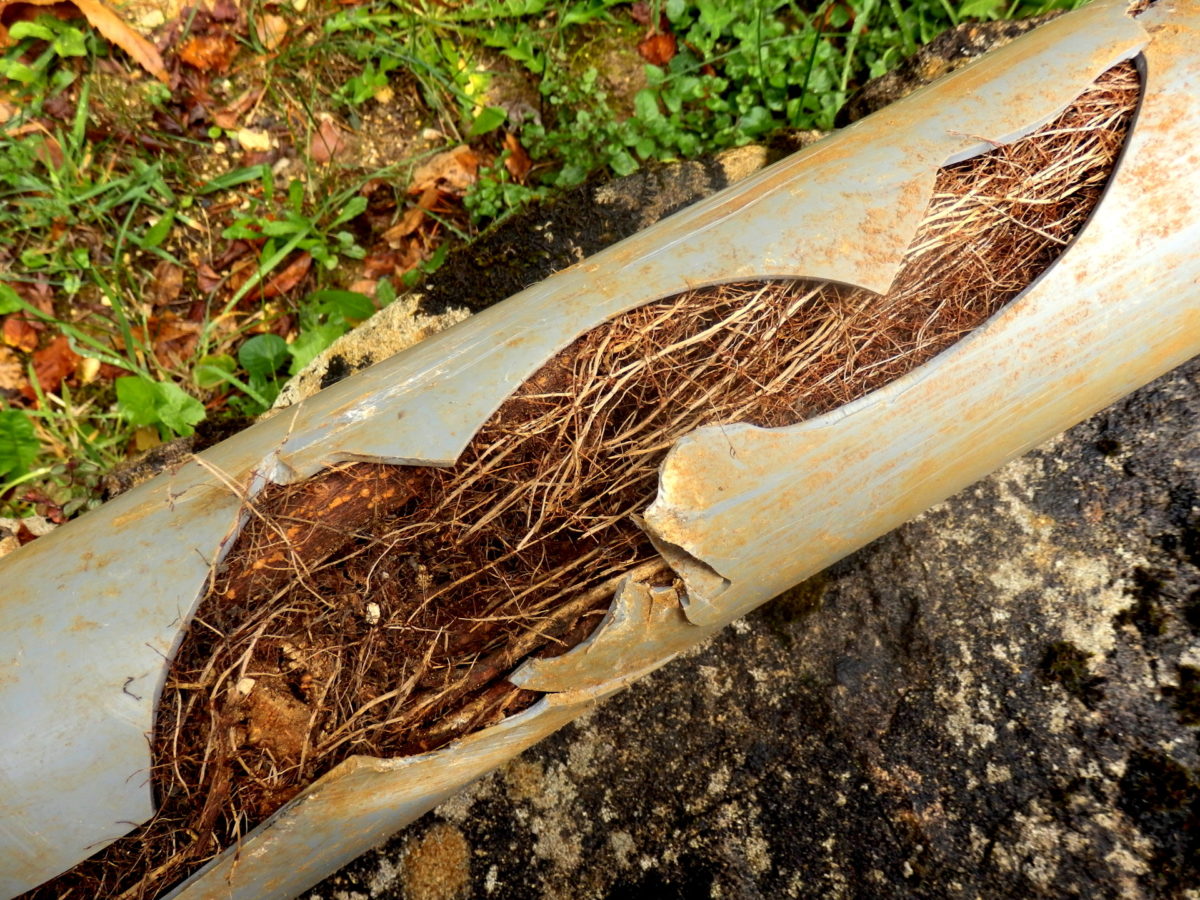
Reno has mature tree-lined neighborhoods, and tree roots are one of the most common causes of serious sewer problems we see. Roots are naturally drawn to the warm, moist environment inside sewer pipes. They find tiny cracks or joint gaps and grow inward, creating a root mass that catches waste and slowly builds into a complete blockage.
Root intrusion often starts as a slow drain — gradual, subtle, easy to ignore. Left untreated, it can cause pipe collapse. Treatment involves clearing the roots with hydro flushing and Root X herbicide treatment to prevent regrowth, and often lining the pipe to seal the cracks roots exploited.
2. Pipe Scale and Mineral Buildup
Reno is known for hard water — water with high concentrations of dissolved calcium and magnesium. Over time, these minerals precipitate inside your pipes as a hard, chalky scale. Older pipes, particularly galvanized steel pipes common in homes built before 1980, can develop severe enough scale buildup to reduce pipe diameter by 50% or more.
A slow drain caused by scale buildup can look deceptively mild for years before flow drops dramatically. Hydro flushing can clear significant scale, but severely scaled pipes may need replacement or relining.
3. Pipe Bellying or Sagging
Sewer pipes need to maintain a consistent downward slope to allow waste to flow by gravity. When soil around a pipe shifts — which happens in Reno due to seismic activity, water table changes, and natural settling — a section of pipe can drop, creating a low point called a "belly."
Waste slows at the belly, solids accumulate, and you get recurring slow drains and clogs. A sewer camera inspection will show the belly clearly. Depending on severity, repair may require excavation and pipe replacement, or relining the affected section.
4. Cracked or Collapsed Pipes
Older clay or concrete pipes are prone to cracking, especially in homes over 40 years old. Cracks allow soil and root intrusion, and as cracks worsen, pipe sections can collapse entirely. What starts as a slightly slow drain can suddenly become a complete blockage — or worse, a sewage leak into your soil.
A camera inspection is the only reliable way to diagnose a cracked or collapsed pipe. Depending on the location and extent, trenchless lining is often the most cost-effective repair.
5. Grease Buildup in the Main Line
Kitchen grease that makes it through your trap gradually accumulates in the main sewer line. In homes where cooking produces large amounts of grease — or in commercial properties — this buildup can be severe. Unlike a localized kitchen drain clog, a greased main line affects multiple fixtures and is significantly harder to clear without professional hydro flushing equipment.
6. Problems at the Municipal Connection
In some cases, the slow drain isn't caused by anything in your private plumbing at all — it's a problem at the point where your lateral connects to the municipal sewer main. Roots, debris, or city-side blockages can affect your home's drainage just as much as an in-home clog. A camera inspection can determine where the problem is located so you know whose responsibility it is to fix.
What Happens If You Ignore It
Slow drains that indicate larger problems don't get better on their own — they get worse. The progression usually looks like this:
- Slow drain — easily ignored, easy to treat at this stage
- Recurring clogs — temporary fixes stop working
- Multiple fixtures affected — main line now compromised
- Water backup in lowest fixtures — significant blockage
- Complete backup or sewage overflow — emergency situation
Each stage is progressively more expensive to address. A camera inspection at stage 1 might reveal a problem that costs a fraction of what it would cost at stage 4 or 5.
What to Do
If you have a slow drain that doesn't respond to basic clearing, or that keeps coming back, don't just keep plunging and hoping. Call us for a camera inspection. We'll show you exactly what's happening in your pipes — on video — and give you an honest, upfront recommendation for the most cost-effective fix.
We serve Reno, Sparks, and all of Northern Nevada. Call (775) 322-2727 — available 24/7, with typical 1–2 hour response times for emergencies.